

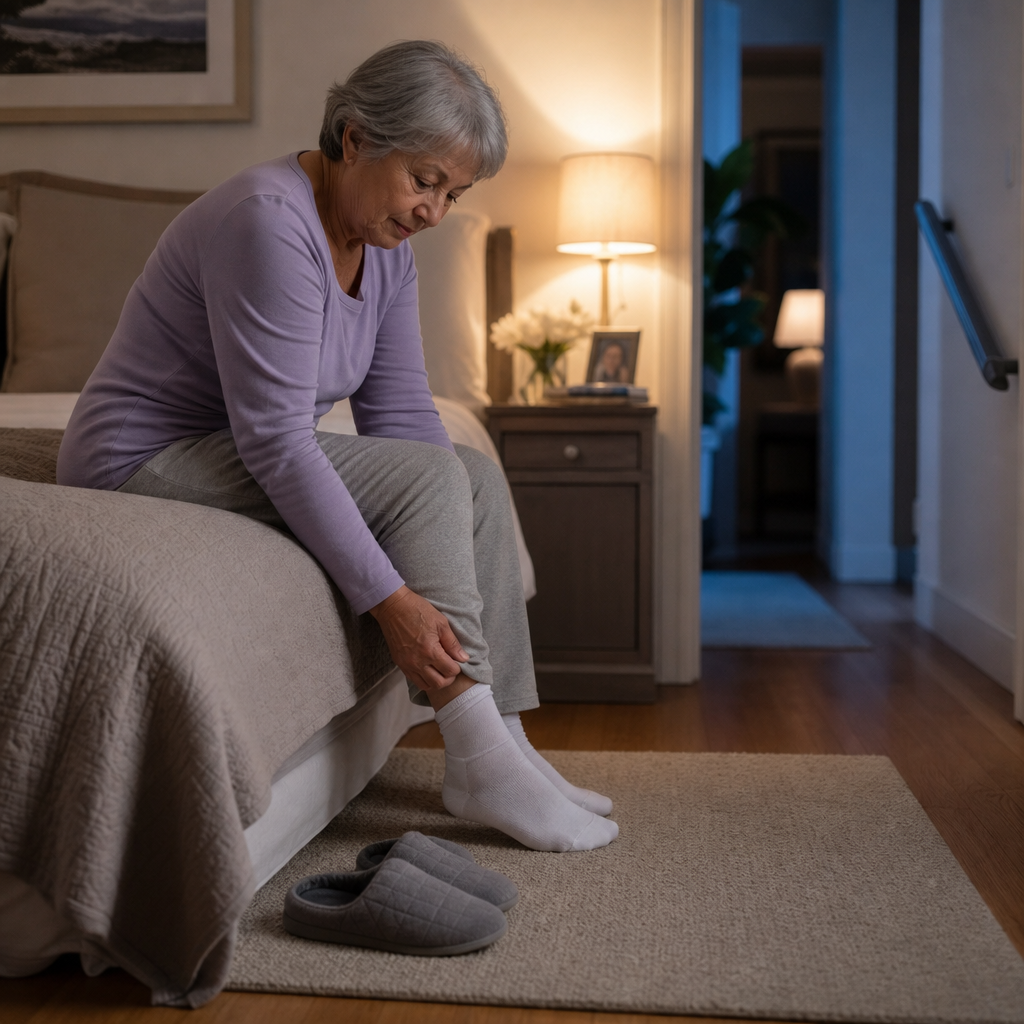
Pins and needles in feet may feel stronger at night because there are fewer distractions, bedding can increase sensitivity, and certain resting positions may place pressure on nerves. Repeated tingling, burning, numb toes, or sleep disruption can occur with peripheral neuropathy, but these symptoms can also have other causes. A neuropathy consultation may help identify the pattern, check sensation and balance, and determine whether further medical testing is appropriate.
Key takeaways about pins and needles in feet
- Peripheral neuropathy means damage or irritation affecting nerves outside the brain and spinal cord, often beginning in the toes or feet.
- Nighttime tingling does not confirm neuropathy or reveal its cause.
- An evaluation may include questions about symptom timing, health history, sensation, strength, reflexes, circulation, and balance.
- Sudden one-sided symptoms, rapidly worsening weakness, or signs of a foot infection require prompt medical attention.
- Treatment goals and responses vary. A careful evaluation should come before choosing conservative or more invasive options.
Why can foot tingling feel worse at night?
People often describe nighttime tingling as pins and needles, buzzing, prickling, or tiny electric shocks. Some notice burning feet at night, while others feel numbness mixed with brief stabs of pain. Even light contact from socks or bed sheets may become uncomfortable.
These sensations can seem more intense once the room is quiet and the body is still. During the day, movement, conversation, and other activity compete for attention. At bedtime, nerve symptoms may be harder to ignore. Warm bedding can also make burning sensations more noticeable.
Body position matters in some cases. Crossing the legs, resting pressure against an ankle, or keeping a joint bent for a long time may temporarily compress a nerve. Tingling that quickly resolves after changing position may be different from symptoms that return every night, spread, or remain during the day.
A common peripheral neuropathy pattern starts in both toes and gradually moves upward. Symptoms may be fairly even on both sides, although one foot can feel worse. Neuropathy can affect sensory nerves involved in touch, pain, and temperature. It may also affect nerves that help with muscle control, contributing to weakness or balance trouble.
What can cause nighttime tingling or numbness?
Symptoms alone cannot identify the cause. Peripheral neuropathy is one possibility, especially when tingling is persistent, affects both feet, or occurs with reduced sensation. Diabetic neuropathy is peripheral nerve damage associated with diabetes. Still, not everyone with tingling has diabetes, and not everyone with diabetes-related foot symptoms has the same nerve pattern.
Other possible contributors can include:
- Blood sugar problems, including diabetes or prediabetes
- Vitamin deficiencies or nutritional problems
- Alcohol-related nerve damage
- Kidney, thyroid, autoimmune, or other medical conditions
- Prior chemotherapy or exposure to certain toxins
- Injury or repeated pressure on a peripheral nerve
- Medication-related effects that require review by the prescribing clinician
- Inherited nerve conditions
Sometimes testing does not reveal a clear cause. This is called idiopathic neuropathy. The term means the cause remains unknown after evaluation; it does not mean the symptoms are imagined.
Circulation problems, skin conditions, joint swelling, and other disorders can also produce foot discomfort. This is why an in-person assessment matters. New symptoms should not automatically be labeled neuropathy based on an online symptom list.
Could nighttime symptoms be causing neuropathy sleep problems?
Yes. Tingling, burning, sensitivity to touch, and unpredictable jolts can delay sleep or wake someone repeatedly. Poor sleep may then make discomfort harder to cope with the next day. Some people also get out of bed frequently to cool their feet or walk until the sensation settles.
Keep a brief symptom record before an appointment. Note whether the discomfort affects one foot or both, where it begins, how long it lasts, and whether sheets, warmth, walking, or position changes affect it. Include any numbness in feet, leg weakness, falls, or difficulty sensing the floor.
Medication decisions should be discussed with the prescribing clinician. Don’t start, stop, or change a prescription because symptoms appear better or worse at night. Instead, bring a complete medication and supplement list to the evaluation so timing, possible effects, and interactions can be reviewed safely.
What happens during a conservative neuropathy evaluation?
At Wellington NeuroDoc, serving Wellington, FL, a consultation begins with the symptom story rather than an assumption about the diagnosis. You may be asked when the tingling started, whether it is progressing, and how it affects sleep, walking, footwear, or daily tasks.
The assessment may consider:
- Light-touch, temperature, or vibration sensation
- Areas of increased sensitivity or reduced feeling
- Muscle strength, reflexes, and coordination
- Walking pattern and balance
- Skin condition, foot temperature, pulses, and visible wounds
- Diabetes, nutrition, alcohol use, prior treatments, and family history
Depending on the findings, a medical clinician may recommend blood work, nerve testing, circulation testing, or another form of assessment. Evaluation can help distinguish a widespread peripheral nerve pattern from a local pressure point or another health problem. It cannot guarantee that a single cause will be found.
Before choosing care, ask what diagnosis is being considered, what findings support it, and whether medical testing is needed. Ask about realistic goals, possible risks, treatment duration, and how progress would be measured. Conservative care may aim to reduce symptom interference, support safer movement, and improve daily function. These are goals, not promised outcomes, and candidacy and response vary.
How can I protect my feet while sensation is changing?
Reduced sensation can make a blister, hot surface, or small cut easy to miss. Check the tops, soles, heels, and spaces between the toes each day. A mirror can help with areas that are hard to see. Wear well-fitting shoes and check inside them for pebbles, rough seams, or folded insoles before putting them on.
Test bath water with an area that has normal sensation rather than relying on a numb foot. Avoid heating pads or very hot water on areas with reduced feeling. Keep nighttime paths clear, use stable lighting, and sit down to put on shoes if tingling or poor balance makes standing less secure.
Contact an appropriate medical clinician promptly for a blister, cut, color change, swelling, or sore that is not improving. A red, warm, draining, foul-smelling, or rapidly worsening foot wound needs urgent attention, particularly for someone with diabetes or loss of sensation.
Call emergency services for sudden one-sided weakness or numbness, facial droop, speech trouble, severe new confusion, or loss of coordination. Rapidly worsening weakness and new bowel or bladder control changes also need urgent medical evaluation.
Frequently asked questions
Does tingling in both feet mean I have peripheral neuropathy?
No. Tingling in both feet can fit a peripheral neuropathy pattern, particularly if it begins in the toes and persists or progresses. However, symptoms alone cannot confirm nerve damage or its cause. An in-person evaluation may help compare sensation, strength, balance, circulation, and other findings.
Should I request an evaluation if symptoms only happen at night?
Consider an evaluation if nighttime tingling repeatedly interrupts sleep, is becoming more frequent, spreads beyond the toes, or occurs with numbness, weakness, wounds, or balance trouble. Brief tingling caused by an obvious position may resolve, but recurring symptoms deserve discussion with a qualified clinician.
Can peripheral neuropathy treatment restore normal sensation?
No treatment can promise restored sensation or a cure. Care goals may include addressing an identified contributor, reducing symptom interference, supporting function, and lowering daily safety risks. The available options depend on the cause, health history, examination findings, and response to care.
What should I bring to a Wellington NeuroDoc consultation?
Bring a medication and supplement list, relevant test results, and notes about when symptoms occur. Include details about burning, numbness, sleep interruption, falls, diabetes history, prior chemotherapy, alcohol use, and foot wounds. Comfortable shoes can also help the clinic assess fit, wear patterns, and walking.
If nighttime pins and needles are affecting sleep or making you uncertain about your foot sensation and balance, Wellington NeuroDoc can discuss whether a neuropathy evaluation is appropriate. Call (561) 793-4700 to request a consultation.



Comments are closed.